
The Archive as Living Memory: Inside the Foundation
Most people support the arts for what they can see. The painting on the wall. The collage under glass. That Bearden exhibition that fills a Saturday afternoon.
The preservation work that makes those experiences possible rarely looks like art. It looks like boxes, folders, and a spreadsheet that refuses to cooperate. It looks like an archivist deciding whether a brittle sheet can be safely handled today or needs to wait.
Yet this is one area where scholarship truly makes a difference.
The Romare Bearden Foundation has been explicit about that mission. It preserves a collection of Bearden’s artworks, and it also preserves the paper trail that makes the work legible: books, articles, letters, photographs, and other materials. What gets saved determines what can be known. What can be taught, exhibited, and verified.
As the Foundation heads into Spring Appeal season, it’s worth saying plainly what that support buys. It buys time. It buys care. It buys access.
It buys the difference between a rumor and a record.
What we preserve, and why it changes what scholars can say
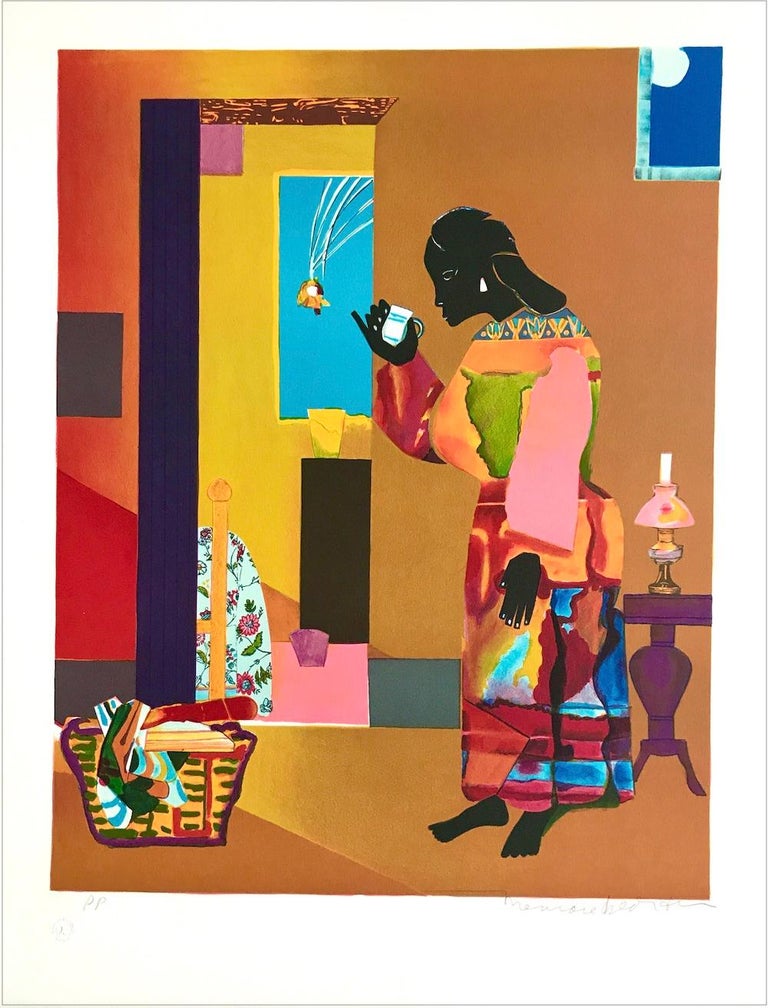
Romare Bearden, Falling Star (1979). This lithograph evokes Southern domesticity and memory—an interior scene anchored by a graceful woman and illuminated by a nocturnal star outside.
The Foundation’s Archives Project inventory is unusually concrete about what “the archive” contains. It lists correspondence, sketchbooks, awards, sheet music, photographs, video and cassette recordings, and published and unpublished manuscripts. It also notes Bearden’s personal library of over 1,500 books and journals.
That list reads like miscellany until you understand the implications.
Correspondence is not filler. Letters and notes show how an artist moved through institutions, galleries, editors, curators, and collaborators. They clarify who said yes, who said no, and why. They can also correct the story after the fact. A “known” date becomes an actual date.
Sketches and sketchbooks change the work itself. They reveal what was tried, what was abandoned, and what was solved with a last-minute pivot. For collage, process is not a footnote. Process is part of the meaning.
Sheet music and recordings complicate the familiar Bearden narrative in the best way. The WPI introduction to the Bearden Papers notes the artist as “visual artist, writer, and composer.” In other words, the archive holds evidence that Bearden’s practice extended beyond what gets reproduced most often in museum catalogs. That expands how the work can be interpreted.
Photographs do double duty. They document a life and they document artworks in time. A photograph of a collage hanging in a particular exhibition is not just ambience. It can become a piece of provenance evidence, and it can anchor an exhibition history.
Then there is the library. A personal library is a record of attention. It shows what an artist read, what stayed close, and what intellectual company he kept. The Foundation is blunt about the point: those books and journals “reflect the broad range of his artistic and aesthetic interests.”
This is the first reason archival work matters now. It expands what can be responsibly claimed.
Preservation is risk management with higher stakes
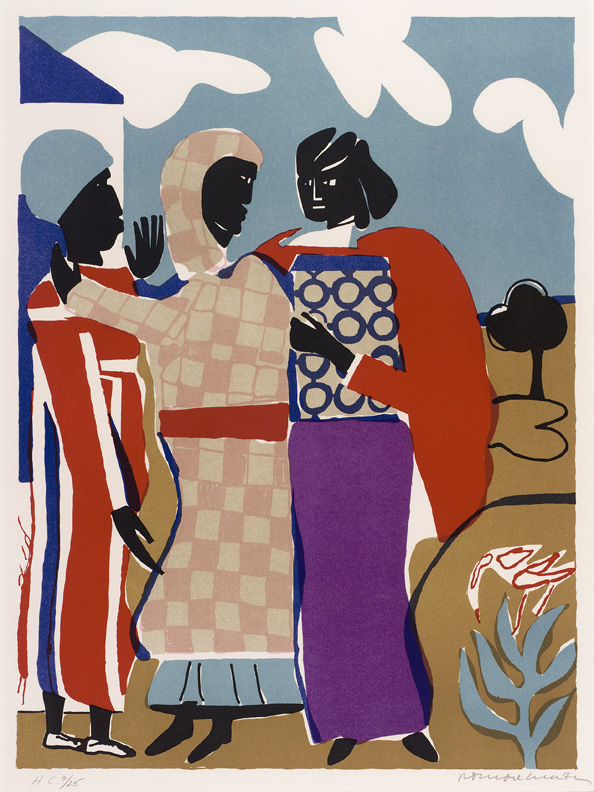
Romare Bearden, Three Women, 1975. With overlapping patterns and voices, Bearden celebrates the bond, strength, and multiplicity of Black women in community.
Archives are fragile.
Paper deteriorates. Adhesives fail. Magnetic tape degrades. Photographic materials are notoriously sensitive. Environmental conditions do not merely “affect” collections. They shorten or lengthen their lifespan.
National Archives preservation guidance for family papers makes the baseline argument in plain language. Cooler temperatures slow chemical decay. Higher humidity increases mold risk. Those facts scale up from personal albums to institutional archives.
Then there is catastrophe. Cultural collections get damaged by the same forces that damage everything else: fire, water, building failures, storms, human error. The Northeast Document Conservation Center puts it without euphemism: disasters can “damage or destroy” cultural collections, and emergency planning is often neglected because daily operations take precedence.
So preservation work includes the unglamorous basics:
- stable storage conditions
- proper enclosures
- careful handling protocols
- preparedness plans that exist before the emergency
The Foundation’s own Archives Project description notes that the materials were processed and cataloged, and that “an appropriate environment” was created for storage, use, and display. That sentence compresses a great deal of labor. It is also a reminder that preservation is not a single task you cross off. It is continuous maintenance.
Digitization is access, and it is also triage
Digitization has become a cultural buzzword, and it can make preservation sound like a magic trick. Scan it, and you’re done. Put it online, and it’s saved.
That is not how serious institutions describe the work.
The Library of Congress makes a practical distinction. Digitization happens for preservation and access, and it requires planning about safe handling and process before the scan even occurs.
The LOC’s digital preservation team makes a second point that is easy to miss. Digital preservation is not the scan. It is the long-term stewardship of files: formats, metadata, storage monitoring, and sustainable management.
Their “Signal” blog says it even more sharply: scanning is fixed in time, and digital preservation is an active long-term commitment.
This matters for a Foundation archive because digitization solves one problem while introducing another.
It solves wear and access. Once materials are digitized, scholars can use them without repeatedly handling fragile originals. Researchers can also work remotely, which broadens who gets to participate.
It introduces digital responsibilities. Files must be stored securely, backed up, migrated as formats change, and described well enough that future users can find them.
Done well, digitization turns “hidden” materials into public knowledge. Once a collection is digitally catalogued, it becomes an accessible resource for scholars, artists, and historians.
And access is the mechanism by which scholarship evolves.
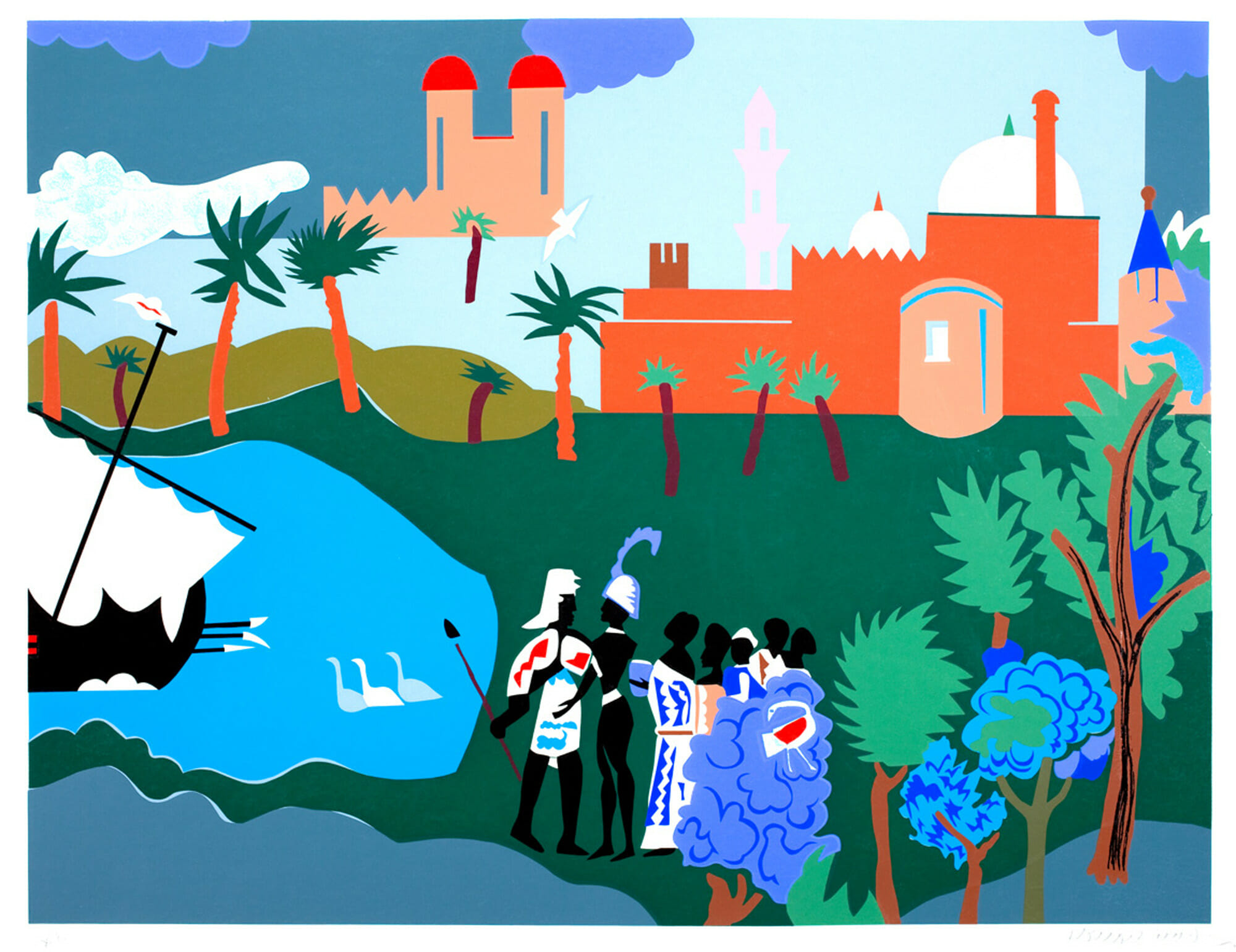
Romare Bearden, Odysseus Leaves Nausicaa (1979). A classical story reimagined through a Black aesthetic, centering Nausicaa’s grace and agency.
What “verified” means in the Catalogue Raisonné pipeline
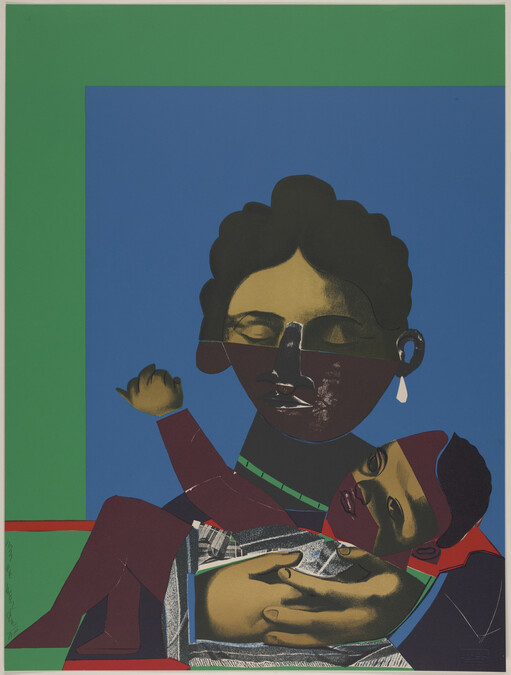
Romare Bearden, Mother and Child (1971). A modern-day Madonna portrayed with dignity and care, merging Renaissance composition with African American context.
The catalogue raisonné is where preservation becomes public-facing. It is also where the term “verified” becomes methodology.
A catalogue raisonné is generally defined as a comprehensive scholarly listing of an artist’s known works, usually including details like medium, dimensions, provenance, exhibition history, and bibliographic references. The New York Public Library’s Art & Architecture collection describes it as a “comprehensive, annotated listing.” WPI describes it as a published compendium that can range from basic physical descriptions to deep documentation with histories and comparative material.
For Bearden, the first public release of the digital catalogue raisonné focuses on unique works created between 1964 and 1969. The Wildenstein-Plattner Institute, who are publishing the Bearden digital catalogue raisonné, notes that it represents a new methodology for safeguarding legacy. The Bearden Foundation describes the resource as free and open, and it notes that the initial release includes extensive research on over 200 works alongside archival documents and photographs from the Foundation’s collection.
Now the crucial part.
The WPI usage guide explains that works “submitted, examined, and verified” by the Bearden committee are shown with a color photograph and a “verified” icon. ArtNet’s coverage adds a clear parallel rule: examined works appear in color and carry the icon, while works traditionally attributed but not verified appear in black-and-white without the icon.
That approach is not cosmetic.
It tells the public what the committee can stand behind because it has seen the object. It also tells the public what remains provisional. That is healthier than the old model, which often offered definitive-seeming catalogs without exposing the uncertainty underneath.
WPI’s broader writing on its “digital corpus” model clarifies the logic. Verified works correlate to a specific, located object that a committee has determined belongs in the oeuvre. That sentence contains the entire pipeline: locate, examine, determine, publish responsibly.
For Bearden, those stakes are not theoretical. WPI notes that the Bearden committee and researchers had to develop strict criteria while assembling the corpus, and it describes a particular challenge: digitizing about 2,500 artwork dossiers revealed gaps, duplicates, and inconsistencies. The result is a catalog that behaves like scholarship instead of branding. It shows its work.
How the archive feeds the catalogue, and why that loop matters
A catalogue raisonné is only as strong as the evidence behind it. That evidence lives in archives.
The Bearden Foundation’s behind-the-scenes piece on the catalogue raisonné argues that the project integrates archival letters and photographs and it emphasizes a platform designed for continuous updates as research develops. WPI’s introduction to the Bearden Papers also frames the archive as a way to surface planning processes, sketches, blueprints, and rare documentation that would otherwise remain out of view.
This is what donors are funding, whether or not the language makes it into the appeal copy.
They are funding the chain of custody from paper to scholarship:
- processing and description
- conservation and safe handling
- imaging and digitization
- metadata that makes materials findable
- committee review that makes publication responsible
A catalogue raisonné is a public tool. The archive is the workshop that keeps it honest.
If the goal is to preserve Bearden’s legacy, it is not enough to circulate the images that are already famous. The future of Bearden scholarship depends on the unglamorous materials that sit behind the art.