

Traveling Bearden: How Exhibitions Expand Access
A Bearden collage does not behave like a JPEG. On a screen, the edges read clean. The paper reads flat. Scale looks consistent, even when it is not. In person, the work is more stubborn. It has seams. It has weight. It has decisions you can feel in your body,
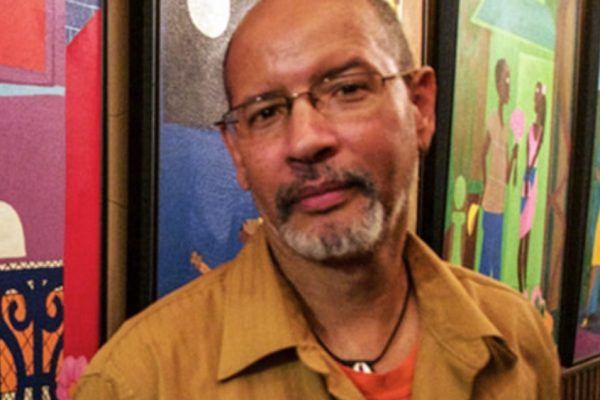
Cinque Artists Talk Program: Jimmy James Greene
Wednesday, June 17, 2026, 6:00 – 7:00 pm – Virtual on Zoom Visual Storytelling and the Sacred Everyday A virtual conversation with visual artist, muralist, and educator, Jimmy James Greene. Join us for another edition of the Cinque Artists Talk series where we talk with contemporary artists. Register on Eventbrite
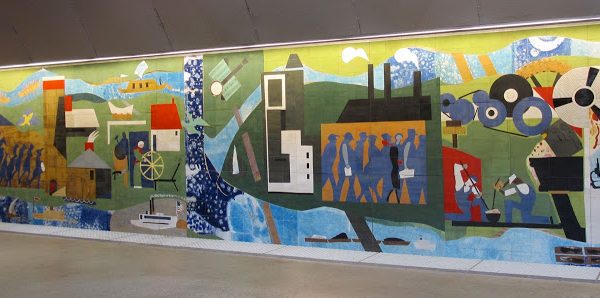
Bearden and the City: Harlem, Pittsburgh, and Beyond
Cities teach people how to see. They teach rhythm. They teach distance. They teach what counts as private, and what gets lived in public. Romare Bearden’s art carries that education. It carries it without postcards. It carries it without the tourist gaze. Two places matter most for this story: Harlem

In Bloom: What Bearden’s Gardens Teach Us About Memory, Renewal, and Living Legacy
Spring is often treated as a season of fresh starts, but in Romare Bearden’s work, renewal is rarely simple. It is not innocence. It is not erasure. It is not the fantasy of beginning again untouched by what came before. It is memory returning in color. Again and again, Bearden

The Archive as Living Memory: Inside the Foundation
Most people support the arts for what they can see. The painting on the wall. The collage under glass. That Bearden exhibition that fills a Saturday afternoon. The preservation work that makes those experiences possible rarely looks like art. It looks like boxes, folders, and a spreadsheet that refuses to

Cinque Artists Talk Program: Omo Misha and Tomo Mori
Wednesday, March 25, 2026, 6:00 – 7:00 pm – Virtual on Zoom Her Vision, Her Voice: Women Shaping Contemporary Practice with Omo Misha McGlown and Tomo Mori. Join us for another edition of the Cinque Artists Talk series Register on Eventbrite for a link to join the live Q &

Artists in Conversation: Bearden’s Legacy Today
The quickest way to flatten Romare Bearden is to call him “influential” and move on. The word gets used as a compliment, but it becomes a shortcut. It suggests a tidy lineage: Bearden invented a look, then later artists borrowed it. That is not what actually happened. Bearden’s afterlife runs

Bearden’s Harlem: A Living Map of Memory
In 1971, visitors who made it to the end of Romare Bearden’s retrospective at the Museum of Modern Art encountered something that still feels bracing. They stood in front of a long Harlem streetscape called The Block and they listened. Bearden had approved an accompanying “audio-tape collage,” commissioned by the

Artistic Mask Sale: Artist-Made Masks Supporting the Romare Bearden Foundation
After a sold-out CONJUR: A Masked Affair in New York City this fall, the Romare Bearden Foundation is thrilled to release a limited selection of one-of-a-kind, artist-made masks—available now as a special Mardi Gras sale. Every purchase supports the Foundation’s nonprofit programming. These masks are wearable artworks: bold, intimate, symbolic

Bearden’s Women: Power, Presence, and Portraiture
Who Holds the Mirror? Who defines grace and strength in Black womanhood? When Bearden painted a mother with a child or an ethereal goddess, he was doing more than making art. He was reclaiming agency—offering Black women their own visual voice in American culture. Romare Bearden dedicated his creative genius

Ever Present: Bearden and the Music of Memory
When Sound Becomes Sight What does jazz look like? How does a blues chord take shape on canvas? For Romare Bearden, these weren’t abstract questions—they were the very essence of his artistic pursuit. Bearden’s collages don’t just depict music—they sound like it. They pulse with rhythm, improvise with color, and
- 1
- 2
Like Us On Facebook

Donate To The Romare Bearden Foundation
When Sound Becomes Sight

Bearden’s tribute to the improvisational spirit of Harlem jazz.
What does jazz look like? How does a blues chord take shape on canvas? For Romare Bearden, these weren’t abstract questions—they were the very essence of his artistic pursuit.
Bearden’s collages don’t just depict music—they sound like it. They pulse with rhythm, improvise with color, and layer fragments like harmonies in a Duke Ellington chart. For Bearden, music was not a background theme; it was a structural principle and a cultural lifeline. His work emerges from the sonic traditions of jazz, blues, and gospel, each note resonating through paper, pigment, and glue.
This spring, the Mint Museum’s exhibition Ever Present: Romare Bearden and Music invites us into that dialogue between sight and sound. It’s a reminder that Bearden’s genius lies not only in what we see but in what we hear through his art.
The Music Inside the Art
Bearden grew up surrounded by music. Born in Charlotte, North Carolina, in 1911 and raised in Harlem during the Harlem Renaissance, his early life was steeped in the cultural ferment of the era. Jazz clubs, church choirs, rent parties, street parades—these sonic textures became his palette.
In his collages, you can almost hear the syncopation. Jagged cuts and sharp contrasts mimic jazz’s offbeat phrasing. Repeated patterns—checkerboard floors, patterned wallpaper—evoke rhythmic motifs. The layering of paper and pigment creates a visual polyphony, echoing how a jazz ensemble builds a composition through interplay and improvisation.
Art historian Robert O’Meally puts it best: Bearden didn’t just paint about music—he painted music itself.
Works That Sing: Carolina Shout, Bessie’s Song, and Three Folk Musicians

Of the Blues: Carolina Shout (1974)
Part of Bearden’s celebrated Of the Blues series, Carolina Shout takes its title from a stride piano piece by James P. Johnson. Here, Bearden transforms a Southern domestic scene into a chromatic riff: angular bodies, tilted planes, and glowing patches of blue vibrate like a blues chord resolving. The sense of motion and swing mirrors the hand-over-hand gestures of stride piano, a style Johnson pioneered and which Bearden revered.

Bessie’s Song (1974)
A tribute to Bessie Smith, the “Empress of the Blues,” this collage captures the intimacy and melancholy of a blues lament. A figure, possibly Bessie herself, anchors the composition, while overlapping fragments suggest the layered emotional register of her music—grief, resilience, humor. The collage glows with deep blues and burnt sienna, tonalities that feel almost vocal in their depth.

Three Folk Musicians (1967)
One of Bearden’s most iconic works, Three Folk Musicians foregrounds the collective performance of music. Two banjo players flank a guitarist, their faces constructed from fractured photographic elements, their bodies integrated into a patchwork of color and pattern. It’s a celebration of roots music as cultural bedrock—music born from labor, migration, and memory. The flat, frontal composition recalls Byzantine icons, elevating these ordinary men to the status of saints.
Improvisation and Rhythm in Collage

A memory in motion: Bearden riffs on an earlier theme with visual echoes of the blues.
Collage was the perfect medium for Bearden’s musical imagination. Like a jazz musician riffing on a standard, he took familiar images—cut from magazines, newspapers, personal photos—and recombined them into something startling and new.
This process mirrored improvisation:
- Fragmentation = syncopation. Interrupting visual continuity mimics jazz’s off-beat surprises.
- Layering = harmony. Overlapping textures create a chord-like depth.
- Repetition of motifs = rhythm. Recurring shapes echo percussive beats.
Bearden himself often compared his creative process to musical composition, noting how he sought a sense of cadence and flow across the surface of the collage.
Friendships, Collaborations, and Cultural Crossovers

A jubilant visual ode to music, memory, and community.
Bearden didn’t just depict music—he lived inside its world. He counted jazz luminaries like Duke Ellington and Dizzy Gillespie among his friends. His Harlem studio was a gathering place for writers, dancers, and musicians.
In the 1970s, he collaborated with Lincoln Center Jazz Orchestra and contributed art for album covers, posters, and stage designs. These partnerships weren’t decorative—they reflected a shared commitment to African American cultural innovation across disciplines.
His ties to music also informed his curatorial and advocacy work. Through the Romare Bearden Foundation, his legacy continues to bridge visual and performing arts, fostering programs that explore how music and art shape collective identity.
The Sound of Memory: Why Music Mattered So Deeply

Bearden takes us backstage to the glamour, grit, and grace of Black performance.
Why was music so central for Bearden? Because it carried memory.
The spirituals and blues he grew up with encoded histories of migration, resilience, and longing. Jazz, with its improvisatory openness, symbolized freedom and possibility. Gospel offered a language for the sacred in the everyday.
Bearden once said that when he worked, he felt like a jazz musician playing a solo—improvising within structure, quoting old standards while inventing something new. His collages became visual equivalents of call-and-response, echoing a culture where memory and creativity coexisted in harmony.
Ever Present: A Call to Experience the Music in Bearden
The Mint Museum’s exhibition Ever Present: Romare Bearden and Music places this interplay of sound and image center stage. Visitors can explore Bearden’s music-themed works, from the pastoral lyricism of Carolina Shout to the urban syncopation of his Harlem collages. Archival materials, sketches, and prints reveal how rhythm shaped his visual thinking.
Can’t make it to Charlotte? The Romare Bearden Foundation’s digital channels offer virtual access to music-infused works and programs that unpack their cultural significance. It’s a chance to see—and hear—Bearden anew.
Seeing with Our Ears
Romare Bearden teaches us that art is never silent. His collages hum with hymns, shout with blues, whisper with jazz refrains. They remind us that creativity is a kind of music—a binding force that carries memory forward while improvising the future.
So let Bearden be your playlist. Visit the Mint Museum, browse the Bearden Foundation’s resources, and consider this question: If your life had a soundtrack, what would its collage look like?