In Bloom: What Bearden’s Gardens Teach Us About Memory, Renewal, and Living Legacy
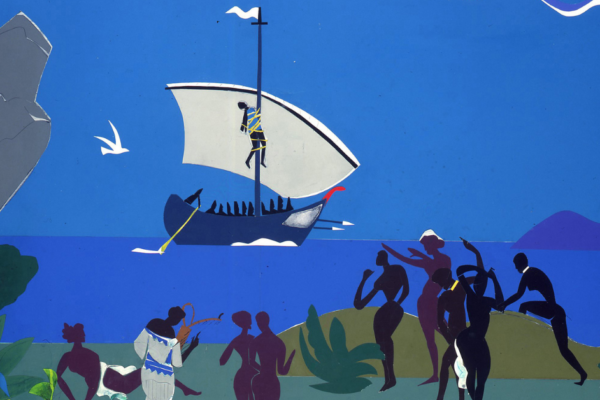
Spring is often treated as a season of fresh starts, but in Romare Bearden’s work, renewal is rarely simple. It is not innocence. It is not erasure. It is not the fantasy of beginning again untouched by what came before. It is memory returning in color. Again and again, Bearden
Cinque Artists Talk Program: Caroline Brewer
Wednesday, April 22, 2026, 6:00 – 7:00 pm – Virtual on Zoom The Art of an Impossible Dream with Caroline Brewer Join us for another edition of the Cinque Artists Talk series Register on Eventbrite for a link to join the live Q & A session. Free online. Register: http://bit.ly/3O8ez6C
The Archive as Living Memory: Inside the Foundation
Most people support the arts for what they can see. The painting on the wall. The collage under glass. That Bearden exhibition that fills a Saturday afternoon. The preservation work that makes those experiences possible rarely looks like art. It looks like boxes, folders, and a spreadsheet that refuses to
Cinque Artists Talk Program: Omo Misha and Tomo Mori
Wednesday, March 25, 2026, 6:00 – 7:00 pm – Virtual on Zoom Her Vision, Her Voice: Women Shaping Contemporary Practice with Omo Misha McGlown and Tomo Mori. Join us for another edition of the Cinque Artists Talk series Register on Eventbrite for a link to join the live Q &
Artists in Conversation: Bearden’s Legacy Today
The quickest way to flatten Romare Bearden is to call him “influential” and move on. The word gets used as a compliment, but it becomes a shortcut. It suggests a tidy lineage: Bearden invented a look, then later artists borrowed it. That is not what actually happened. Bearden’s afterlife runs
Bearden’s Harlem: A Living Map of Memory
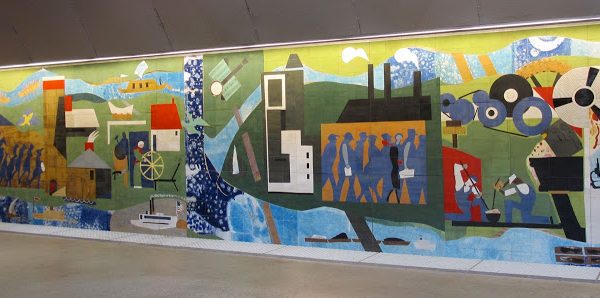
In 1971, visitors who made it to the end of Romare Bearden’s retrospective at the Museum of Modern Art encountered something that still feels bracing. They stood in front of a long Harlem streetscape called The Block and they listened. Bearden had approved an accompanying “audio-tape collage,” commissioned by the
Cinque Artists Talk Program: Ademola Olugebefola
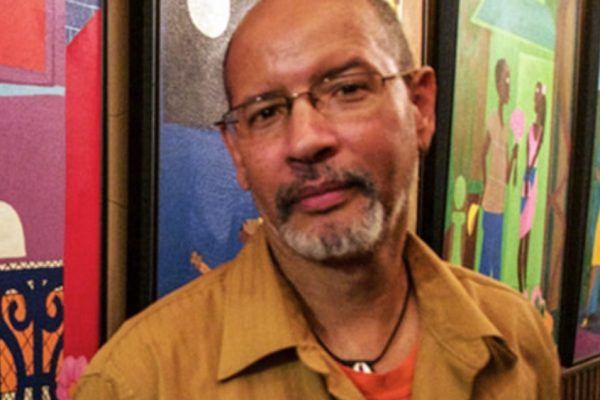
Thursday, February 26, 2026, 6:00 – 7:00 pm – Virtual on Zoom Building the Block: Ademola Olugebefola Join us for another edition of the Cinque Artists Talk series, with artist, Ademola Olugebefola. Register on Eventbrite for a link to join the live Q & A session. Free online. Register: https://bit.ly/3MzwMJD Coltrane’s
Artistic Mask Sale: Artist-Made Masks Supporting the Romare Bearden Foundation
After a sold-out CONJUR: A Masked Affair in New York City this fall, the Romare Bearden Foundation is thrilled to release a limited selection of one-of-a-kind, artist-made masks—available now as a special Mardi Gras sale. Every purchase supports the Foundation’s nonprofit programming. These masks are wearable artworks: bold, intimate, symbolic
Conjur 2025 Online Auction is live
Through October 30, 2025 9:00 pm Conjur Online Auction is live! The Conjur: A Mask Affair is here. On Thursday, Oct 30, the masks come into the room and the celebration of 35 years of the Romare Bearden Foundation begins! The Edison Rooftop will be ablaze with an evening of
Bearden’s Women: Power, Presence, and Portraiture
Who Holds the Mirror? Who defines grace and strength in Black womanhood? When Bearden painted a mother with a child or an ethereal goddess, he was doing more than making art. He was reclaiming agency—offering Black women their own visual voice in American culture. Romare Bearden dedicated his creative genius
Ever Present: Bearden and the Music of Memory
When Sound Becomes Sight What does jazz look like? How does a blues chord take shape on canvas? For Romare Bearden, these weren’t abstract questions—they were the very essence of his artistic pursuit. Bearden’s collages don’t just depict music—they sound like it. They pulse with rhythm, improvise with color, and
Recovering Romare: Dr. Camara Holloway on Building the Bearden Catalogue Raisonné
When it comes to documenting an artist’s life’s work, few tools are more powerful, or more painstaking, than a catalogue raisonné. But for many African American artists, these essential scholarly resources have been few and far between. That’s exactly why the launch of The Romare Bearden Catalogue Raisonné Project, the
Like Us On Facebook
Categories
- African-American Art
- Art & Activism
- Art Education & Mentorship
- Art History
- Black Artists & Social Change
- Cinque Artists Program
- Community & Cultural Identity
- Events
- Exhibitions
- Fellowship
- Fundraiser
- Honoree
- Modern Art
- Modern Collage
- News
- Paris Noir
- Programs
- Romare Bearden
- Romare Bearden & the Spiral Group
- Transatlantic Culture
Donate To The Romare Bearden Foundation

Dr. Camara Holloway is the Project Manager for the Romare Bearden Digital Catalogue Raisonné at the Wildenstein Plattner Institute. Her research expertise is on twentieth century American and African American art, with special knowledge of African American photography and critical race art history.
When it comes to documenting an artist’s life’s work, few tools are more powerful, or more painstaking, than a catalogue raisonné. But for many African American artists, these essential scholarly resources have been few and far between. That’s exactly why the launch of The Romare Bearden Catalogue Raisonné Project, the first digital catalogue raisonné devoted to a 20th-century African American artist is such a landmark moment.
At the center of the project is Dr. Camara Dia Holloway, a trailblazing art historian whose research focuses on race, representation and African American art. As project manager for the Bearden catalogue raisonné at the Wildenstein Plattner Institute (WPI), she has led the multiyear effort to recover, research and publicly share the full breadth of the artist’s oeuvre.
“As the project manager, I oversee and coordinate all the research related to Bearden,” Holloway explains. “Our goal is to create a reference tool that identifies and documents Bearden’s artistic output.”
That goal is now taking shape with the launch of the catalogue’s first installment: a digital publication covering the years 1964–1969, a turning point in Bearden’s career and in the history of modern American art.
A Scholar Drawn to Bearden
Dr. Holloway’s interest in Bearden runs deep. “I became aware of Bearden at a young age,” she recalls. “My parents collected books on African American art and had a copy of M. Bunch Washington’s 1973 monograph, The Art of Romare Bearden: The Prevalence of Ritual.”
Later, as a graduate student and emerging scholar, Bearden’s work resonated with her focus on the Black subject and the politics of representation. “I am a scholar invested in the history of race and representation, and Bearden’s imaginative portrayal of the Black subject commanded my attention,” she writes. “With my interest in African American photography, I had been particularly drawn to Bearden's works known as Projections. I presented a paper on this topic at the symposium held in conjunction with the National Gallery of Art’s 2003 retrospective.”
She already had a working relationship with the Bearden Foundation as well, having helped organize their symposia in Pittsburgh at the August Wilson Center in 2009. So when the catalogue raisonné project came into view, Holloway knew immediately how vital it would be.
“African American art history is in part a recovery project for the artists who came before who are not recognized as they deserve because of historical circumstances,” she explains. “Because catalogues raisonnés have historically not existed for African American artists, scholars in the field, including myself, are often required to undertake catalogue raisonné research as a preliminary step in the development of exhibitions and monographs.”
“When I learned about this project, I immediately recognized the contribution that it stands to make.”
Why 1964–1969?
The decision to begin the project with the years 1964 to 1969 was both strategic and symbolic. As Holloway explains:
“We started with this five-year period because it was pivotal for Bearden. This is the moment when he establishes himself as a master of collage, the medium for which he is most remembered. Using this method, he developed a compelling mode of Black figuration that resonates with audiences to this day.”
It was also a moment of transition. “The mid-1960s is the point when he transitions to artmaking full time, following his long stint as a social worker, which freed him up to produce his remarkable body of work,” she adds.
That burst of creative energy—channeling jazz, literature, memory, and Black cultural life into dynamic new visual forms—makes this first phase of the catalogue a natural entry point for longtime admirers and first-time audiences alike.
The Archive as Portal
The catalogue raisonné is tightly integrated with another powerful digital resource: the Romare Bearden Papers, which Holloway has thoroughly examined alongside WPI archivist Samantha Rowe.
“Bearden’s preserved archives offer a window into his world,” Holloway explains. “We can get a sense of his life and creative circle through the photographs and audiovisual materials; what he felt was important to make note of artistically through the source materials, sketchbooks, and journals; and what documentation about his work that he thought was significant to keep.”
Those contextual materials bring the catalogue to life—not just as a database of facts, but as a living narrative of an artist’s practice. “This archival material fleshes out the basic facts about the artwork…to lend insight into Bearden’s wealth of influences, expansive worldview, and the incredible knowledge and discernment that went into the creation of his art.”
A Rare Milestone, and a Call for More
The release of the Bearden catalogue raisonné is not just a technological achievement. It’s a symbolic one.
“The WPI has broken new ground by taking on this project devoted to an African American artist,” Holloway writes. “The Bearden catalogue raisonné is amongst the first 20th century American artist projects that the WPI has taken on since its founding, which branches out from the Wildenstein Institute’s historical focus on French Impressionists.”
Why have so few catalogues been created for Black artists?
“A driving force for the production of catalogue raisonnés is the mainstream art market, an arena where African American artists have only begun to gain traction,” she explains. “Historically, the production of catalogues raisonnés has been financed by market players… the research is lengthy and time-consuming and the traditional printed book format is very expensive to print and distribute.”
Add to that the historical neglect of Black art by major institutions and archives, and it becomes clear why catalogue projects like this are still so rare—and why they matter so deeply.
“The creation of such reference tools that recover the basic information about African American artists and their output, and make it more readily available to a wide audience, can only benefit those interested in this field,” Holloway writes.
What Comes Next
The Bearden CR will continue to grow in phases, building on discoveries and community engagement. “We are excited to learn more from the general public, scholars, enthusiasts, artworld stakeholders, and especially collectors of his work,” Holloway writes.
“Bearden was very experimental and developed a command of a range of media. The documentation of this work will be revelatory about the rich complexity of his practice.”
And for Holloway, there’s still much to uncover.
“I look forward to adding future installments that will enrich what we know about Bearden and his art… I am sure that he will continue to surprise us even as we get to know him better.”
Explore and Engage:
- Stay Updated: Follow the progress of the Romare Bearden Digital Catalogue Raisonné project through the Wildenstein Plattner Institute's official announcements.
- Dive into Bearden's World: Visit the Romare Bearden Foundation's website to explore more about his life, works, and ongoing projects dedicated to his legacy.
- Join the Conversation: Engage with art communities and discussions surrounding Bearden's impact and the significance of catalogues raisonnés in preserving artistic heritage.
By immersing yourself in these resources, you contribute to the vibrant continuum of appreciation and scholarship that keeps Bearden's spirit alive in the art world.
Archives
- April 2026
- March 2026
- February 2026
- January 2026
- October 2025
- August 2025
- July 2025
- June 2025
- May 2025
- April 2025
- March 2025
- February 2025
- November 2024
- September 2024
- May 2024
- April 2024
- November 2023
- October 2023
- September 2023
- July 2023
- May 2023
- April 2023
- February 2023
- January 2023
- December 2022
- November 2022
- October 2022
- June 2022
- October 2021
- September 2021
- August 2021
- May 2021
- March 2021
- February 2021
- November 2020
- October 2020
- September 2020
- June 2020
- February 2020
- May 2019
- March 2019
- February 2019
- January 2019
- November 2018
- April 2018
- December 2017
- November 2017
- September 2017
- July 2017
- March 2017
- January 2017
- December 2016
- April 2016
- January 2016
- June 2014
- September 2013
- January 2005